Category Archives: Diablo 4

Is Diablo 4 Finally Saved? A Mixed Bag of Improvements and Lingering Issues

A conversation I’ve seen a lot of people discussing lately is, “Is D4 finally saved? Is D4 no longer bad? Has the game finally earned our money?” The answers are mixed. Diablo 4 dads are definitely not going to like this video. I’ve covered Diablo 4 extensively in the past, from the highs of its pre-release hype, where I was praising the game like it was the second coming (probably shouldn’t have said it like that), to the abrupt disappointment when the game was finally released. But Diablo 4 has improved a lot since then. It’s gotten a lot of really good updates, and just recently, with Diablo 4: Loot Reborn, we’re finally starting to see what I would consider as the 1.0 version of Diablo 4—almost a year later. And while the game has definitely improved, is it enough to change the way players view Diablo 4? No. Will it ever be enough? Maybe. There are a lot of questions that still linger in the background. Is Diablo 4 stepping in the right direction? Is it finally on the path to redemption? Is the game finally going to earn Diablo 4 Gold we spent on it, or is Diablo simply on a treadmill, improving itself over time but ultimately not going anywhere?

Major Improvements and Ongoing Challenges
I can’t believe I’m saying this, but after playing Diablo 4 Season 4: Loot Reborn, I’m genuinely impressed. If I had to give a concise thought on its improvements, I’d simply say that the game just feels better to play. On launch and for the better part of a year, Diablo 4 just felt bad. Leveling was slow, stats were convoluted, play felt aimless, and everything in the game was poorly implemented. It lacked quality of life and often felt like it was extending your playtime doing menial tasks rather than what you’re there to do: slay demons. For the better part of a year, Diablo 4 was a game that required a thousand steps to walk two feet. But with its latest seasonal update, many of those steps have been removed, barriers to fun have been lifted, and I think it’s important to give the game its due.

Stat Rework and Crafting System Overhaul
The stat rework and the reduction of affixes, while making itemization a little more boring (not that it was all that interesting to begin with), make the overall experience of finding loot now much more enjoyable. In the past, 95%—more like 99%—of the things we would find were useless. However, now I’m constantly finding things that will impact my build in one way or another. One of the core issues for me at the very beginning of the game when it first launched was the odd complexity of the various affixes—those weird conditional affixes Blizzard previously had in the game. Now that it’s more simplified, I can quickly compare a couple of items and decide which is better without having to have a hierarchy of affixes right next to me.

Quality of Life Improvements
In addition to the stat rework, we got greater affixes, tempering, and masterworking. Greater affixes give us the chance to roll on stats with a higher ceiling, and masterworking and tempering give us the chance to put unique conditional affixes onto an item to improve them, ultimately having a massive
impact on our build and allowing us to specialize into those builds. This system, though a bit less interesting than in Last Epoch, is a welcome change and a sign that Blizzard is finally going back to doing what they do best: borrowing someone else’s ideas to improve their games.

Ongoing Quality of Life Issues
However, the game still faces inherent weaknesses. The longer I play and the higher level I get, the less interesting the gear on the ground becomes because the crafting system is now the actual gearing system. You’re really not going to find anything all that interesting outside of uber uniques or if you get super lucky and find something that drops with a couple of greater affixes. While the stat and crafting changes have been enjoyable, the biggest improvements to the game that make it feel significantly better are the quality of life fixes. For instance, we now have stash tabs, XP has been increased, drops have been increased, and we can salvage items and get everything we want from them rather than having to take them to individual vendors.

Improved Gameplay Experience
Legendary affixes and gems no longer clutter our inventory. Vendors aren’t 30 miles away from each other; often, they’re in the exact same building or just a couple of feet outside the door. Horses can run in town, mob density is higher, and the Hell Tides are more engaging. All these changes have substantially improved the player experience and have left me really enjoying the game right now. Diablo 4 at launch and up until just recently felt so damn tedious to play. You’d play for hours and hours and feel like you accomplished absolutely nothing. This was because of how far everything was between one another, how barren and boring the open world was, and there really wasn’t any reason to be out there in the first place. Now, with all of that friction removed, the game just feels so much better to play.

Long-term Viability and Player Retention
I’m not going to let it go that it took this long for them to fix the game to the point that they have. It really does feel like we’ve been beta testing this game for over a year for $70. But with that said, the game feels a lot better. Just the change alone to the towns, making the vendors right next to each other—oh my god, how did they not notice it sooner? Well, it’s easy: it’s because this game has been trying to pretend that it’s not what it is. It’s been trying to pretend that it’s not Diablo, wearing an open-world Scooby-Doo mask.

Final Thoughts on Diablo 4’s Evolution
Diablo 4’s improvements have made it a much more enjoyable game, but it still has a long road ahead. Blizzard needs to keep everything from this season moving forward and make their seasons more interesting. They need to make their battle passes more exciting and rewarding for both free and paid versions and seriously need to look at their cosmetic shop and pricing. If Blizzard wants to make Diablo 4 a successful live service game, they need to continue addressing the ongoing issues and make their seasonal content more engaging.
In conclusion, while Diablo 4 has come a long way from its rocky launch, it still has a lot of work to do to fully redeem itself in the eyes of its players. Here’s hoping that a new expansion doesn’t undo all the work they’ve done so far. For now, I’m cautiously optimistic and curious to see where things go from here. Stay cool, stay righteous, stay safe, my friends, and I’ll see you in Sanctuary. Peace.
It’s in full swing, buy the best Diablo 4 materials, Diablo 4 duriel mats and Diablo 4 Gold for sale from MMOexp, join the wave and conquer the dark world.
Diablo 4 Season 4: A Class Tier List

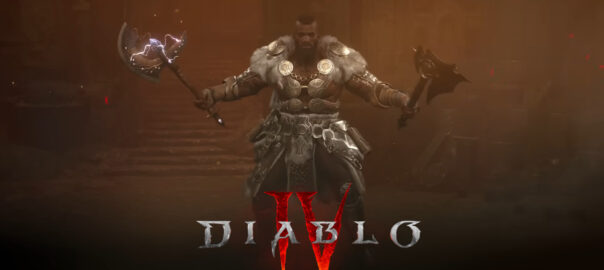
With a breakdown of Diablo 4 Season 4’s class tier list. If you’re wondering which class to choose for this season, buckle up because Season 4 brings the most substantial update Diablo 4 has seen yet. With a complete itemization overhaul, new crafting systems, a revamped Hell Tide experience, and a challenging endgame mode called The Pit, there’s a lot to dive into. So let’s dissect the classes and their strengths and weaknesses in this exciting new season.

The Pre-Tier List Discussion:

Before delving into the tier list, let’s lay down some groundwork. The tier list is based on the test server experience and subsequent patch notes, with considerations for potential bugs and undiscovered interactions. The criteria for ranking classes include leveling experience, general endgame farming, boss takedowns, and tackling the challenging endgame content, notably The Pit.

C Tier: Sorcerer and Barbarian

Starting with the C tier, we find the Sorcerer and Barbarian. While neither class is inherently weak, they don’t shine as brightly as others in Season 4. The Sorcerer, known for its speed farming capabilities, sees a decline in dominance due to adjustments in power levels. Similarly, the Barbarian’s hammer-centric meta takes a hit, making it less formidable in boss encounters.

B Tier: Rogue and Druid

Moving up to the B tier, we encounter the Rogue and Druid. Each class boasts distinct strengths and weaknesses. The Rogue excels in speed farming, can obtain Diablo IV Materials or gold, while the Druid’s werewolf tornado build proves potent against bosses and in high-tier dungeons. Both classes offer versatile options but fall short of the A tier due to certain limitations in scaling and specialization.

A Tier: Nothing At All?

Surprisingly, the A tier is empty in Season 4. Why? Because the Necromancer reigns supreme with such dominance that it warrants an entire tier of its own. With multiple build options excelling in every aspect of the game, the Necromancer stands head and shoulders above the rest. From minion-based builds to bone spear snipers, Necromancers offer unparalleled versatility and power.

The Necromancer Dominance:

With minion builds, Necromancers effortlessly decimate bosses and conquer The Pit. Bone spear snipers boast unmatched burst damage potential, while other builds ensure efficiency in speed farming and general endgame content. The leveling experience, once dominated by other classes, now sees Necromancer minions rising to the top.

Choosing Your Path in Season 4:

As Season 4 unfolds, players face the enticing task of selecting their class. Whether you’re drawn to the speed and versatility of the Rogue, the primal power of the Druid, or the commanding dominance of the Necromancer, there’s a path for every adventurer. Experimentation and adaptation will be key as players navigate the ever-changing landscape of Diablo 4.

Conclusion:

In the dynamic world of Diablo 4 Season 4, the class tier list serves as a compass, guiding players toward their chosen destinies. With each class offering unique strengths and playstyles, the journey promises excitement and challenge at every turn. So, as you embark on your adventure, remember to embrace the power within and unleash your fury upon the darkness that threatens Sanctuary.

And that’s the breakdown of Diablo 4 Season 4’s class tier list. Choose wisely, and may the loot be ever in your favor! For more guides and all the latest news about Diablo 4, check out MMOexp. You can also enjoy buying cheap Diablo 4 Gold service here.

Diablo 4 vs. Path of Exile: A Disparaging Comparison

Path of Exile consistently introduces captivating new leagues every 3-4 months, and even more frequently during the PoE2 transition period. Each league not only incorporates unique mechanics but often brings a substantial amount of content or transformative elements. Several examples highlight the richness of these leagues:

  • Affliction: This league introduced the Woods, a second level of ascendancies, wisps, seven unique items, a new boss, extensive reworks to old content with fresh or revamped item drop pools, transfigured gems, and significant alterations to the labyrinth.
  • Ultimatum: A seemingly straightforward trial mechanic in every map offered an optional challenge where players could defeat waves and gamble on even tougher ones for increased rewards. This league featured a trialmaster boss, sweeping balance changes, numerous new gems, 13 uniques, 14 div cards, and more.

Path of Exile stands out for its abundance of compelling optional content, allowing players to engage with or specialize in virtually any league. In contrast, Diablo 4 struggles to deliver even the equivalent of a single Path of Exile league, despite purportedly dedicating six months to development. The lackluster outcome raises questions about the efficiency of the development process.

Diablo 4’s latest league comprises recycled dungeons, plagued by poorly designed traps crammed into confined spaces. The introduction of an inconsequential pet, unlikely to become a permanent fixture in the game, further contributes to the disappointment. Additionally, the hub lacks the convenience of consolidating all portals in one place. The sum total of these additions—six unique items and six aspects with some rebalances—pales in comparison to the breadth of content and innovative mechanics regularly featured in Path of Exile leagues.

Comparing Diablo 4 to earlier Path of Exile content, it becomes evident that the former falls significantly short. The wealth of ideas that Blizzard could have drawn from, given the years of development, is apparent in the exhaustive patch notes of PoE leagues. Delirium, Legion, Betrayal, Delve, Incursion, Breach, Bestiary, Prophecy, or Harbinger—each of these leagues brought substantial changes and provided players with unique gameplay experiences. It’s not just about the league mechanics but the myriad additional alterations and introductions that elevate the overall gaming experience.

Diablo 4, unfortunately, fails across the board. Its leagues offer a poor baseline, falling far below industry standards and failing to compete with the main contenders in the gaming scene. The perplexing reality of Diablo 4, a year into its development, is a lackluster product that seems outpaced by the accomplishments of smaller teams. While Diablo 4 boasted a large team and budget, games like Path of Exile continue to deliver consistently engaging content, and other titles like Last Epoch have been pushed out with endorsements and ample player-focused content. The disparity between expectations and reality raises concerns about the trajectory of Diablo 4 and its ability to resonate with a discerning player base.

Do you support this view? Please tell me what you think, thank you. And buy Diablo 4 gold, items, and service at mmoexp.com, we are always with you.

Diablo 4 – Simplifying Build Experimentation

Baldur’s Gate 3 has genuinely made it challenging to rekindle my interest in Diablo 4. Although I’m still in the early stages of BG3, I find myself with an abundance of gold. In contrast, Diablo 4’s approach to experimentation with builds feels like a chore. While I thoroughly enjoy the leveling experience and combat mechanics of Diablo 4, my penchant for experimenting with various builds has been stifled by the cumbersome gold requirement for respecs.

One of the aspects I appreciate about Baldur’s Gate 3 is the freedom it grants for purchasing intriguing and useful items from vendors. Moreover, I’ve been able to respec my character multiple times to explore different build possibilities, each time only incurring a nominal fee of 100g. This fee is comparable to trivial expenditures, much like a few random cups or goblin bows found scattered throughout the game world.

In Diablo IV, I am an enthusiast of alternate characters, always eager to explore novel builds and combat strategies. While endgame objectives hold less significance for me due to the game’s relatively shallow nature, the ability to experiment with different approaches is what fuels my interest. The game’s patch notes discussed enabling players to experience their fantasy scenarios, but in practice, there’s an undeniable absence of means to test and experiment without resorting to an excessive gold grind.

Their proposed solution to this issue does not seem adequate. The question arises: Why does a non-MMO economy necessitate gold drains? As a solo player, I long for the capacity to explore new strategies without being restrained by the confines of a demanding economy. I seek the freedom to experiment and test the waters, to diversify my combat tactics without inflicting a significant blow to my in-game progress.

I yearn for the opportunity to undergo build transformations without it feeling like I’m making a monumental decision. The act of modifying my character’s skill tree and paragon board should not mirror birthing a child; it should be a fluid and adaptable process. I aspire to attempt various playstyles during my journey without impeding my overall advancement in the game. My desire is to indulge in the nostalgic experience of lounging in my recliner, engaging in console gameplay, and eliminating foes without the weight of overcommitment to a single build.

For this reason, I advocate for a simplified method of revising skill trees and paragon boards at a trivial cost. I understand the significance of grinding for legendary aspects and gear, and I am fully willing to engage in this pursuit. However, my request is for a system that empowers me to explore diverse build strategies without needing to sacrifice my virtual currency reserves. This aspiration stands before I even consider the process of rerolling stats on equipment.

In conclusion, Diablo 4 has the potential to enrich its gameplay experience by facilitating effortless experimentation with alternate character builds, if you have more diablo 4 gold and items. By implementing a more accessible respec mechanism, the game can embrace players who yearn to diversify their playstyles without enduring an undue financial burden.